Filters

  NCC Finland
Success Story


wood
AI-TRANSPWOOD: Artificial intelligence methods and modelling accelerate the…

NCC FinlandNCC Finland is part of the EuroCC2 project, which establishes national HPC competence centers in different European countries. NCC Finland…

read more
  CoE HiDALGO2
Success Story


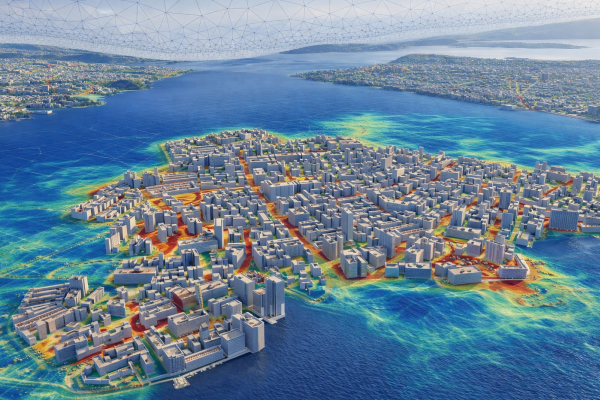
AI generated aerial view of the City of Stockholm simulating withe colours the wind flow between the buildings
High-resolution urban wind comfort computation for the city of Stockholm

In a collaborative effort between HiDALGO2, SLB-analys, and ENCCS, researchers have developed a scalable HPC solution to simulate wind patterns…

read more
  NCC Finland
Success Story


Mining industry
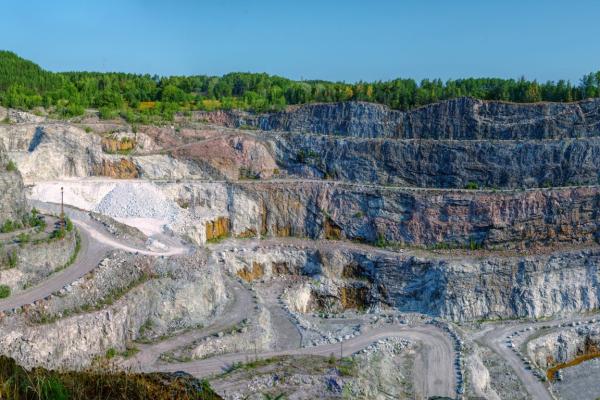
Artificial intelligence solutions for the mining industry through research…

NCC FinlandNCC Finland is part of the EuroCC2 project, which establishes national HPC competence centers in different European countries. NCC Finland…

read more
  NCC Finland
Success Story


Image: AB Enzymes and Adobe Stock
LUMI supercomputer boosting environmentally friendly enzyme development

NCC FinlandNCC Finland is part of the EuroCC2 project, which establishes national HPC competence centers in different European countries. NCC Finland…

read more
  NCC Finland
Success Story


LLM
Root Signals: The quest for leadership in LLM reliability evaluation and…

NCC FinlandNCC Finland is part of the EuroCC2 project, which establishes national HPC competence centers in different European countries. NCC Finland…

read more
  NCC Poland
Use Case


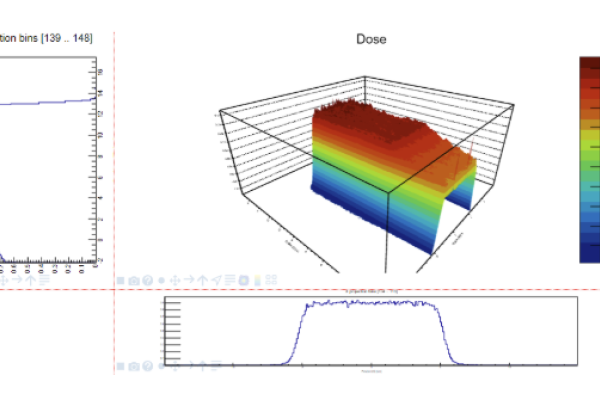
 Spatial distribution of dose calculated on HPC cluster and visualised using the yaptide platform. The simulation was based on a clinical treatment plan.
Radiation transport simulations for radiotherapy

Scientific challenge:Hadron radiotherapy is currently one of the fastest-developing methods of teleradiotherapy. The high precision of dose delivery…

read more
  NCC Austria
Success Story


In the background a stylised nuclear power plant, in the front the title "Success Story"
How a start-up is rethinking the nuclear industry

Italian start-up CAELUS trained the first AI model to handle administrative and regulatory tasks for nuclear power plant operators, freeing up…

read more
  NCC Finland
Success Story


IQM hardware@IQM
LUMI supercomputer powers the optimisation of IQM’s quantum processors

NCC FinlandNCC Finland is part of the EuroCC2 project, which establishes national HPC competence centers in different European countries. NCC Finland…

read more
  CASTIEL 2: Coordination and Support Action
Use Case


Lava flow during volcano eruption on La Palma, Autumn 2021. Image (C) ESA under CC BY-SA 3.0 IGO
Natural hazard management and mitigation through HPC

Natural hazard mitigation with HPCNatural disasters have been a constant threat for humankind – think of earthquakes, volcano eruptions or…

read more
  NCC Austria
Success Story


on left side of the image: blue musical waves on black background, on the right the title of the article: "Viennese start-up develops new  AI tool for music production"
Viennese start-up develops new AI tool for music production

Start-up Beat Shaper has developed a tool for electronic music that can generate both complete tracks and – what’s new – editable project files. This…

read more
  NCC France
Success Story


DéSaN
Injection of terminological knowledge and grey literature in health into a…

The Digital Health Department (DéSaN) of Rouen University Hospital is a multidisciplinary team in medical informatics and medical documentation.…

read more
  NCC Sweden
Success Story


Cover image: KTH Uses LUMI HPC for Aircraft Damage Detection
KTH Uses LUMI HPC for Aircraft Damage Detection

SummaryKTH Royal Institute of Technology used LUMI HPC resources within the GENEX project to develop multiphysics simulations and Machine Learning…

read more

Testimonials

NCC Czechia

“I appreciate the efforts of all the partners who have been and continue to be involved in the construction of the vaccination centre. It is good to note that an important element in the design of such a centre was the supporting simulation, which was developed by scientists at IT4Innovations and without which the testing of the capacity of the centre would have taken many times longer. We now know that the centre is capable of vaccinating up to 2,600 people per day, and we only wish we had enough vaccines to fully test the capacity in practice.”

Ivo V.
NCC Serbia

“A long-term goal of an entire scientific field is to synthesize materials which are superconductive at room temperatures. This kind of discovery would call for a new industrial revolution", states Jakša, adding that, by the new method and use of supercomputer resources at the Institute of Physics Belgrade, which is to be considerably upgraded by the ERC funds, "it would be possible to calculate conductivity and dynamical properties without the input of unnecessary and incontrollable approximations, a feat which has so far been inconceivable”.


Dr. Jakša V.
NCC Finland

“LUMI’s enormous computing capacity has been extremely useful to us. We know that it is still more efficient than other supercomputers we have used – among the top 10 of the most powerful supercomputers of the world. There is also international interest in the use of LUMI. Posiva Solutions promotes and sells its expertise and modeling skills internationally. LUMI has opened new opportunities for this, and increased interest in the company among HPC and nuclear waste management communities (interested parties/stakeholders).”

Tiina L.
NCC Finland

"For Iceye most important has been the fast and flexible access to computing resources. CSC’s support for the deployment of LUMI was also excellent. We were able to send messages and questions to CSC, and CSC organized meetings and support. With the hands-on support, we got off to a good start.”

Tapio F.
NCC Czechia

“The cooperation with IT4Innovations confirmed the applicability of the CFD method in the design and optimisation of the SCR technology. By speeding up the design process of the SCR technology, time and cost savings are achieved and, in addition, the optimised SCR technology design leads to more effective NOX emission reduction and extended technology lifetime, which has a positive impact on the environment.”

Vojtěch V.